

Righteous Blue
A little story and some Mike Worrall.

Here, there are words divided by artwork mostly unrelated to anything the words have to say:
A figure, no more remarkable than you or I, navigated through the flowing masses of a foreign street — on the way to an intended but, so far, unclear destination. Having arrived in the great, dynamic metropolitan at the zenith of the day and only having stopped momentarily since, it was with tired feet that our stranger now traversed the spaces between elaborate and imposing structures. Sounds buzzed out from vehicles, machines, and the devices and mouths of faceless bodies occupying the street. Lights of different frequencies fluxed in the urban sprawl’s reflections. Our stranger took notice of the rarity at which eyes would meet during the brief periods of waiting for signals to pass and signs to cross, quickly becoming accustomed to the lack of an impulse to observe the direction those eyes faced. The stranger, alerted to a change in position, went from one side of the street to another. After rounding a significantly dull corner, a sense of urgency within the stranger could finally cease, as the journey’s end was now noticeably within reach. A gray tablet engraving was eyed once more, before being shoved into a pocket.
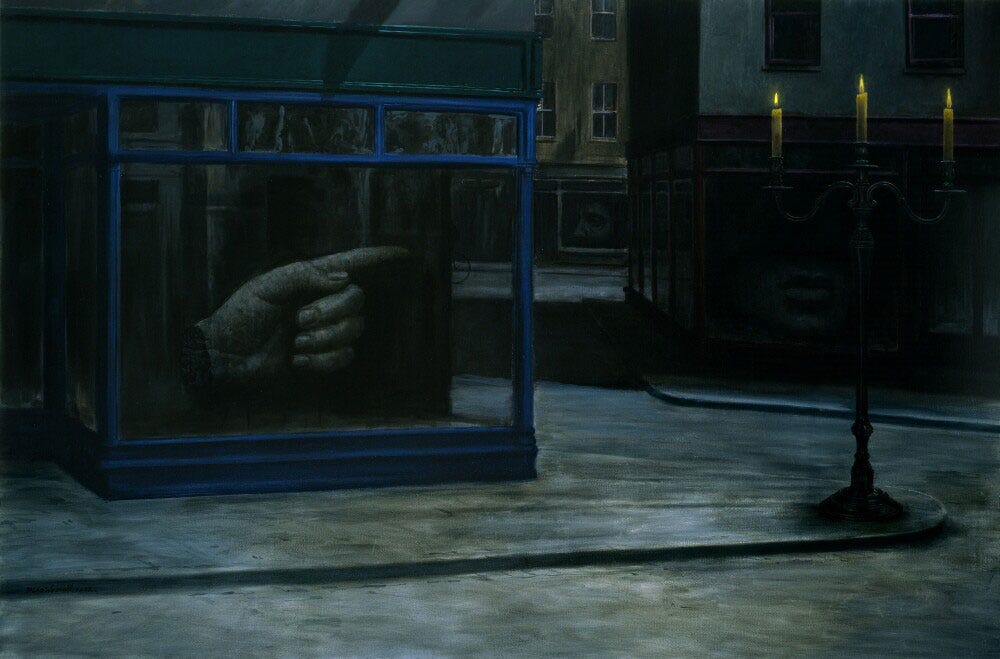
The visitor, spying the final destination, staggered and weaved between arrays of people and lifeless obstacles, carrying a sense of relative ease and detachment on the way through and down the necessary section of street. The stretch of masses, like most of the city grid, was incredibly intricate, noisy, and devoid of a sense of warmth. This truth of fatiguing, careless fog lived so ubiquitously and wholly throughout that one particular exception, possibly the only one in existence, almost went completely unnoticed. Instead, stopped for a moment by the dissident, magnetic pull, our person of interest attempted to place the strange aura — to locate the source of this obscure uniqueness, until that feeling of the greater purpose returned, ceasing the momentary disarmament. Continuing on a bit further in that direction, there the destination stood. Its expectant obtained an entrance, therein a key of sorts was received, before a specific door further off a ways was located. Behind that door, our fair-minded foreigner would stay for some time, unbothered, untouched, and unseen for it all. Eventually, what little light ever reaches the area naturally would do so, and the door would be open once again, not long after.
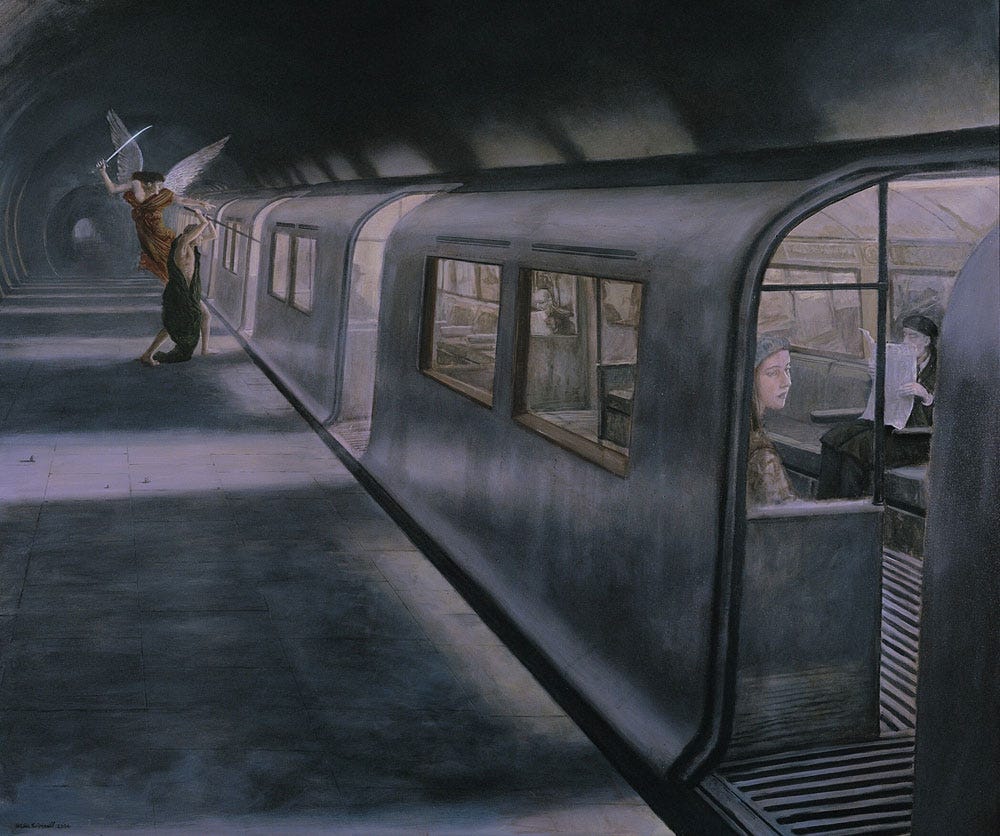
At this time, for a period of weeks, the diligent traveler would leave and set about for a certain objective, perhaps two or three streets away. The stranger would leave the temporary domicile, make way to a similarly unexceptional structure, and then, upon reaching it, would go about some unclear business, before returning at a time that would make the routine roughly symmetrical. This practice would repeat day after day, until one day, it would falter. On this day, during the morning commute to this indecipherable objective, there was an interruption. Noticing a large crowd gathering and an unusual ruckus forming around it, the decision to cross at a further point than usual, without second thought — or perhaps really a first, was easily made. Instinctively, a minor change in route and routine was acted upon. There was no reason to think this difference would amount to anything near significant. This could be realistically certain, without much need or possibility for any logic to be applied, and yet, something other than the ordinary did happen as a result of it. The stranger passed by that same exterior that had been so unexplainably magnetizing on the first day in this foreign place, the one that seemed to emanate the most difficult sensation to wrap a head around.
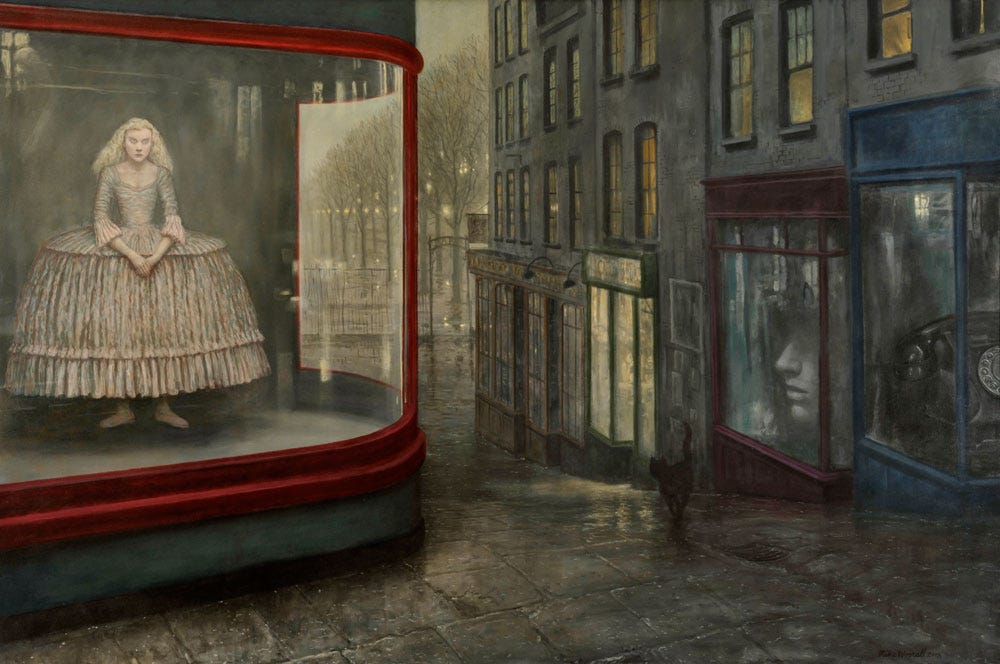
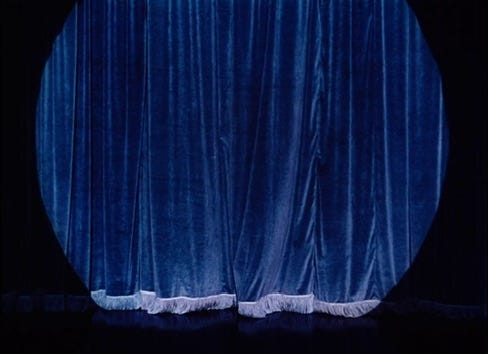
There it was again. On approach, like crossing an invisible threshold, a switch seemed to be flipped. It was as if there were a colorless, scentless, silent fire on the other side of the otherwise unremarkable, near-opaque windows, attracting, burning, crackling, and roaring all the same. Lingering a moment longer, the stranger, back laid against the window, removed a hand from a pocket and observed the time. A turn of the head revealed that, in closeness to the glass material, sight could be found after all. Immediately, the floor could be spotted, and some short distance away, there were dark blue curtains obscuring the contents of the room and its walls beyond. The stranger pulled away from the building, and mustering the will power to treat it as any other, returned to the duty at hand. Shortly after, and with a quicker pace, the usual route was returned to. The visitor reached the building not much later than most days, went about business, took the typical way back — where there were zero signs of unusual commotion, entered the temporary place of stay, right on schedule, and very soon after, killed the lights.
Three days later, the dutiful stranger’s time in the great, suffocating metropolis had come to an end, and it was time to return to more permanent residence, before work would pick up and become reason to leave again. Once more, the visitor set out into the chittering, conversation-less streets, full of moving parts, clouded faces, smoggy structure’s peaks, and uppity machine chatter. Upon arrival, the visitor had come out of a meekly orange-accented terminus. This time, it was a different station some blocks away that the exiting visitor disappeared into, after reaching by sporadic rail. This was a place, this briefly navigated epicenter, that would never be returned to, and after leaving its foreign sensibilities and returning to more specific familiarities, our primary person of interest would never consider it again, beyond perhaps a possible thoughtless report and recounting of events. A piece of her, deep inside, mourned this with more intensity than any part of her had ever felt, but this is not something she was likely to ever know. Besides, this was alright. It was to be expected, was it not? Indeed it was, and it went accordingly. This was one of many places visited in a life, one place with many people, just the same as any other in so many ways.
Many others would do the same. In fact, many do, and months after arriving home, our protagonist would happen to unknowingly read the obituary of one of these other visitors. Not long after settling back, maybe a couple of weeks, she had begun to be plagued by temporary sickness and some not so conclusory. There were colds and sinus troubles. One particularly nasty cold lasted weeks and obstructed a celebration. Doctors identified a tumor, thankfully benign, and it was dealt with. Once the growth had gotten to a certain size, it was almost more of a relief to have it removed than to learn than there was no danger of it spreading. Viral infections came and went. She complained of excessive sweating and fatigue for months, believed to likely be unrelated and connected to some underlying condition, a chronic something or another. It rarely effected her work very much. On this particular day, she stayed home. Nothing felt significant, and nothing felt compelling, until she found herself reading obituaries that stood out due to being issued for excluded but statedly tragic causes of death. She didn’t know her district or origin, but her vague story was strangely captivating, though she knew little of the truth.
A documented tourist of little means, she arrived in the urban sprawl on a unique but not totally dissimilar trajectory to another. She visited corners and alcoves with a sense of wonder like no other. The buzz and indifference of the city was perplexing and positively fascinating. Every day after her arrival, she would find herself in exploration of the many streets before her. She would lose herself in the newly found but familiar turns and and back channels. On a final adventurous afternoon, she became entranced by a building with indecipherable remarkability. After much consideration, she went for her belongings and succinctly returned. A man followed her and lost her. She captured pictures of the structure’s front and sides. She studied the reflections around its walls. The woman was torn between awe and anxiety, as she bore into its glass at close proximity. A figure paced and disappeared in one of many hallways, beyond the curtains, on the inside. As the investigative wanderer pressed against the exterior of the mystifying secret, a door blew open and outward beside her. The obituary of Judy Jane Bruce would be brief but say that she led an extraordinary life. It would say that her love reached many, and she was loved in return. Her departure was tragic but quick, being one of many in a catastrophic event that should have been prevented. Though her name would not go on to be well known among the world, rather be quickly forgotten, her personal writings and collections produced throughout her life would go on to be the basis and inspiration for countless praised materials. Judy Jane’s obituary would be impersonal but truthful and profound. Above all, it would communicate that her life couldn’t have been further from wasted.
thank you Jack for introducing me to Mike Worrall's work, this was beautiful and captivating. I love surrealism so much. I looked into him more after reading this and its still crazy to me that he is self taught and has been making art since the 60s. so unbelievably cool.